


Oct 1, 2026
The Latest Trend in Sustainability? It’s Proof.
View more

Today’s post is by guest author
Kelly Bousman
SVP, ESG and Sustainability
Electronics recycling has become a business necessity. Organizations need to securely retire technology, meet growing regulatory requirements, recover valuable materials, and demonstrate measurable sustainability progress.
Yet most electronics recycling providers still rely on the same operating model: collect equipment, ship it long distances to a centralized facility, and process it.
AVI-SPL asked a different question: What if the recycling process itself could be redesigned?
Our top-notch global supply chain team met the challenge head on. By combining advances in logistics, artificial intelligence, and transportation, AVI-SPL has created an electronics recycling program that isn’t simply more convenient—it’s fundamentally different. Three innovations set it apart.
Most providers consolidate retired electronics at a single processing facility, often requiring equipment to travel hundreds or even thousands of miles before recycling begins.
AVI-SPL built a different model.
Instead of relying on one recycling company, we developed a network of vetted, qualified regional recycling partners that process equipment as close as possible to where it’s collected. Although far more complex to coordinate, this hyper-localized strategy significantly reduces transportation emissions while allowing customers to receive consistent service across their locations.
No two electronics recycling projects are alike. Equipment types, shipping constraints, local recycling capabilities, transportation options, and reporting requirements all vary from customer to customer.
To manage that complexity at scale, AVI-SPL developed a custom AI agent trained on electronics recycling best practices, component analysis, shipping dimensions, partner capabilities, and internal logistics strategies.
The system rapidly evaluates each opportunity, recommends the most efficient recycling approach, automates quoting, coordinates pickup schedules, and manages documentation throughout the process. The result is faster execution, greater operational efficiency, and a scalable, favorable customer experience.
Transportation is often overlooked in electronics recycling, yet it contributes directly to the environmental impact of the process.
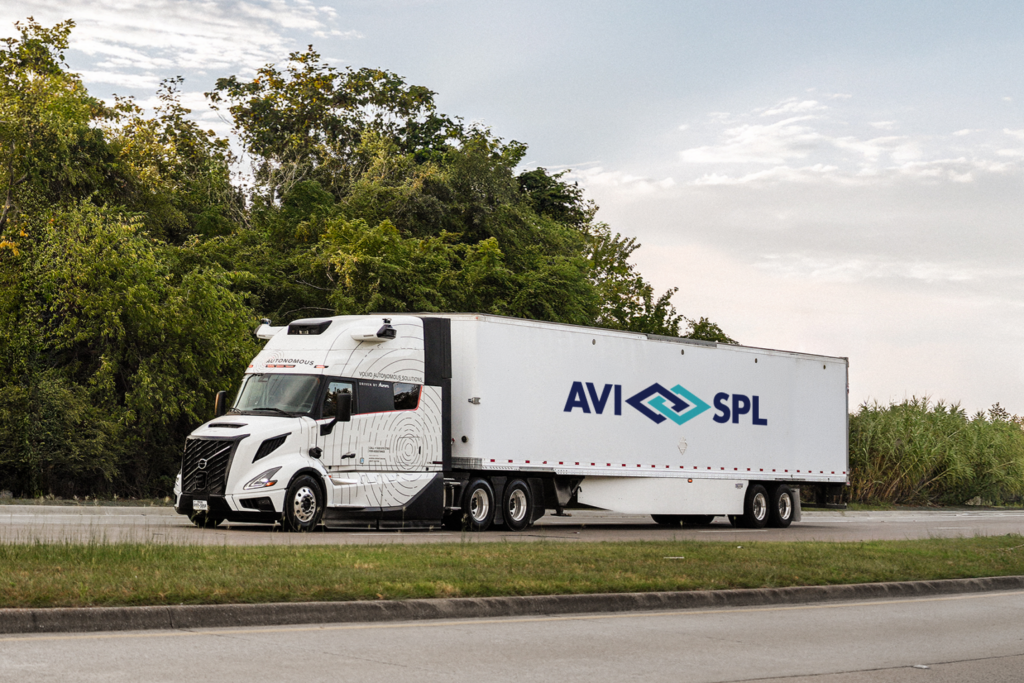
AVI-SPL became the first systems integrator, and among the first companies of any kind, to incorporate autonomous trucking into its supply chain for transporting electronic waste. The company’s first driverless route was dedicated exclusively to e-waste, demonstrating how emerging transportation technologies can help build a more efficient and sustainable supply chain.
Innovation doesn’t stop with collection and transportation.
Every retired asset is evaluated to determine whether it can be refurbished or upcycled before recycling. When equipment reaches the end of its useful life, certified data destruction and detailed reporting help customers meet both cybersecurity and sustainability requirements.
As demand for responsible electronics recycling continues to grow, AVI-SPL believes the industry needs more than incremental improvements. It needs new ways of thinking about logistics, technology, and circularity.
That’s exactly what this program was designed to deliver. What to be part of the change in how we collectively manage e-waste? Contact us.