
Sep 13, 2026
Elevate the Shared Experience with AVI-SPL
View more
The hybrid meeting room experience defines how reliably your teams can connect, collaborate, and communicate across locations. A modern meeting room works when the experience is consistent, easy to use, and supported by reliable video, audio, and collaboration tools that work the same way every time.
Across offices, room types, and regions, teams expect the same experience whenever they walk into a meeting. Yet the experience is often inconsistent.
59% of employers believe their organization ensures a seamless experience across all environments, but only 46% of employees agree. That 13-point gap reflects what users experience every day.
Connections take longer than they should, audio drops out, and sharing content becomes more difficult.
These issues create friction in the moments that matter most. They also increase support demands for your IT team.
The meeting room is a critical touchpoint in the collaboration experience. It shapes how meetings begin, how your teams engage, and how consistently technology performs across environments.
You likely support a mix of collaboration spaces across your organization.
Each space serves a different purpose, but the user experience should feel familiar in every room.
Without defined standards, your teams must relearn how to start meetings or share content in every room. This slows meetings down and reduces confidence in your technology.
Consistency across room types ensures that hybrid meetings work the same way, regardless of location or space.
Designing hybrid meeting spaces starts with defining how each room will be used. Then you can align your room layout, technology, and user experience to support consistent collaboration across your environments.
Consistency comes down to how these technologies work together. When video, audio, and content sharing perform reliably, meetings become easier to join and more productive for everyone involved.
Video helps your teams stay connected across locations and creates a stronger sense of presence during hybrid meetings. The right camera experience also reduces friction by helping remote participants stay engaged and follow the conversation more easily.
Audio has one of the biggest impacts on meeting quality and overall collaboration. Clear, reliable sound helps conversations move naturally and keeps participants engaged. When every voice is heard consistently, in-room and remote participants can contribute with confidence.
Shure IntelliMix Room Kits help bring a more consistent experience into hybrid meeting rooms with high-quality audio and simpler setup across spaces. Designed to support AI-driven meeting spaces, clearer voice pickup can also improve transcription accuracy, making it easier for your teams to revisit conversations after calls end.
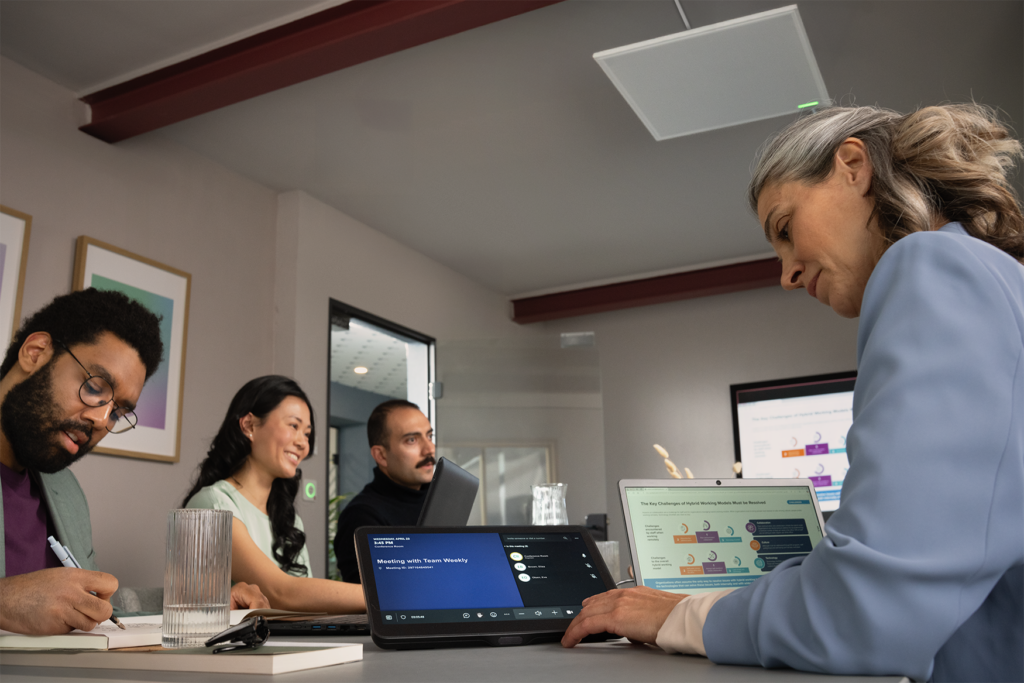
Displays shape how participants follow content, engage with remote attendees, and stay aligned throughout the meeting. With the right setup, meetings become more dynamic by allowing teams to view people, presentations, and shared information at the same time.
LG Express Install helps organizations deploy meeting rooms faster with integrated solutions that simplify installation and reduce setup complexity. By aligning technologies from day one, LG supports smoother rollouts and more efficient room deployments across multiple locations.
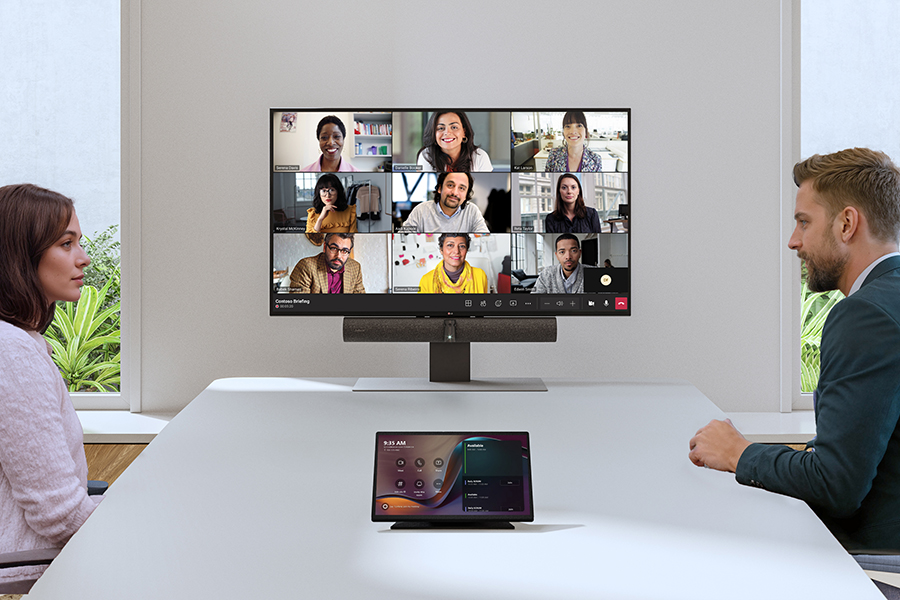
Projection helps bring larger meeting spaces to life with flexible, high-impact visuals. It is especially effective in training rooms, multi-purpose environments, and spaces where teams need to engage with content at scale.
Epson projectors help organizations create engaging visual experiences in larger and more flexible collaboration spaces. From training rooms to multipurpose environments, Epson solutions support clear visibility for content and participants while extending consistent hybrid meeting experiences beyond traditional room layouts.
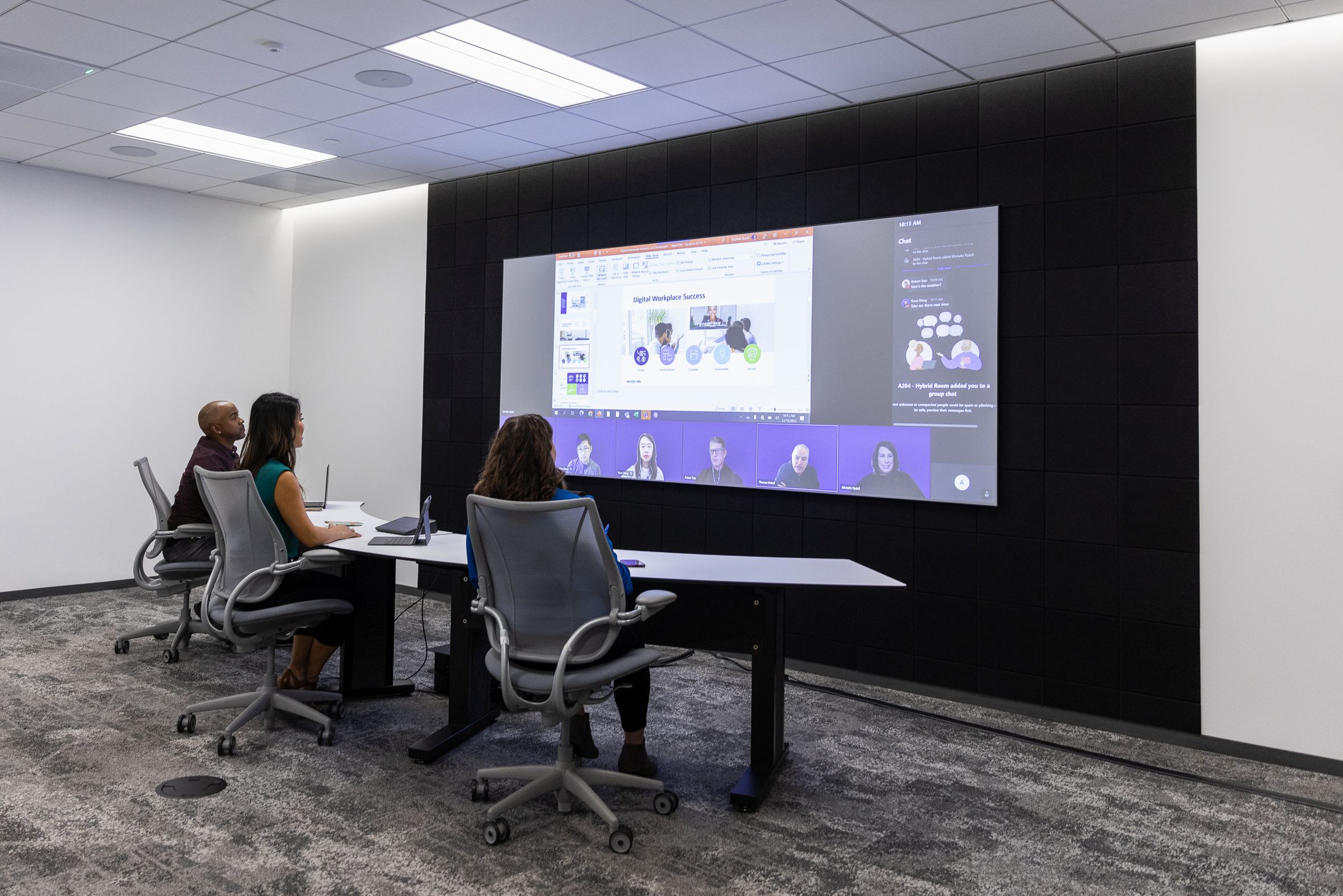
Beyond technology, furniture also plays a key role in conference room design and how your teams use meeting spaces. The right layout supports comfort, visibility, movement, and more natural collaboration throughout the meeting.
Meeting room scheduling is part of your overall experience. When it works well, meetings start on time, and your teams spend less time searching for space.
When these systems are connected, you improve room utilization and reduce friction across your organization.
Consistency across your meeting rooms directly impacts performance and support.
When your teams know what to expect, meetings start faster and run smoothly.
Establishing clear meeting room standards helps you maintain consistency across locations while supporting flexible work environments.
You can standardize meeting rooms by defining room types, aligning core technologies, and applying consistent configurations across every location.
Your meeting rooms play a central role in how your teams collaborate across environments.
When your meeting room experiences are consistent, reliable, and easy to use, you support stronger communication and reduce friction across your workplace.
AVI-SPL helps you design and support meeting environments that improve performance and reduce complexity at scale.
Evaluate how your meeting spaces perform. Understanding where inconsistencies exist is the first step toward delivering a more reliable and consistent experience across your organization. Contact AVI-SPL to get started.