


Dec 22, 2025
Top Benefits of AI Tools in Live Meetings with Samsung
View more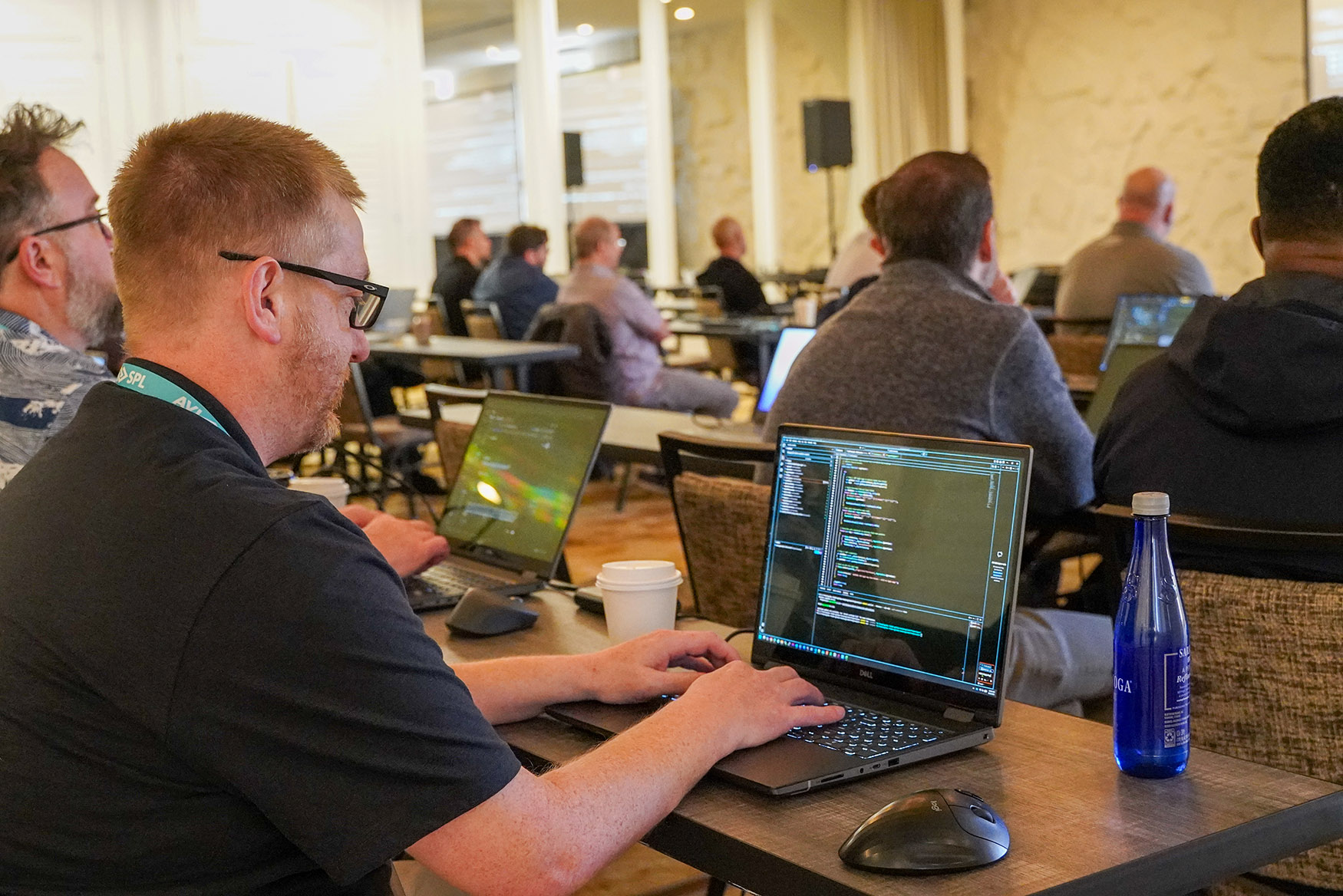
At our Technical Operations Acceleration Summit, one of the most energizing moments came from an unexpected place. The AI Promptathon.
More than a hackathon, this hands-on experience brought together over 30 programmers from across the business to explore how AI is shaping the way software is built, tested, and improved.
What quickly became clear is this. AI is not replacing programmers. It is redefining where they create the most value.
David Thorson, VP of Programming, shared this key takeaway:
“Emerging agentic AI tools make it possible for anyone to generate source code. But the role of a programmer, understanding the problem, defining the right approach, and validating the outcome, is more important than ever. AI does not replace these instincts. It depends on them.”
AI can accelerate progress in seconds. It can also lead teams in the wrong direction just as quickly. During the Promptathon, moments of breakthrough were often followed by frustration when outputs missed the mark. That tension is part of the reality of working with AI today, and it reinforces the need to keep programmers in the loop to guide, validate, and course-correct.
Programmers have always been builders, problem solvers, and truth seekers. They translate human needs into systems that work reliably over time.
That hasn’t changed.
What has changed is how quickly ideas can move from concept to execution.
The software development lifecycle, requirements, design, implementation, verification, and maintenance, still applies. But AI is compressing timelines and expanding possibilities. The value of a programmer is no longer just in writing code. It is in understanding the problem deeply enough to guide AI toward the right solution.
As Brent Penman, Platform Development Manager, shared:
“AI tools remove the friction between the problem and the solution, so you spend more time in the part that is actually fun.”
Before the Promptathon began, teams participated in an overview of AI development tools, workflows, and real-world use cases. This included a live demonstration showing how agentic AI can generate, refine, and polish an AV programming solution from documentation and source files.
From there, teams got to work.
They explored a mix of AI tools, from web-based platforms to integrated assistants to terminal-based AI. The diversity of approaches showed just how flexible and accessible these tools have become.
Projects fell into two main categories.
The first focused on productivity and efficiency. Teams worked on automating repetitive tasks, managing repositories, and improving day-to-day workflows. These efforts highlighted how AI can reduce friction and free up time for higher-value work.
The second category focused on experimentation. These teams explored new tools, built creative applications, and pushed the boundaries of what AI can enable.
One standout example involved integrating with AV system APIs to gather real-time system insights and improve quality checks during testing. This demonstrated how custom tools can support better decision-making at critical phases of development.
AI opens up the possibility to build entirely new applications that extend beyond traditional AV programming use cases. These projects highlighted how quickly ideas can be brought to life when AI is combined with technical expertise and creativity.
Across every project, collaboration played a critical role. When teams encountered limitations, they shared insights, refined prompts, and adapted quickly. The combination of human collaboration and AI capability proved to be a powerful accelerator.
As AI becomes more integrated into development workflows, new competencies are emerging.
Programmers must now evaluate the quality of AI models, design effective prompting strategies, and build validation checkpoints into their workflows. Managing AI behavior, maintaining context, and ensuring outputs align with expectations are becoming essential skills.
At the same time, these tools introduce new challenges.
AI creates constant activity. Prompts, iterations, approvals, and outputs require attention. Without structure, this can lead to context switching, mental fatigue, and reduced productivity.
The same discipline that defines great programmers today will be required to manage AI effectively.
AI is a powerful tool, but it is not a replacement for sound development practices.
Programmers must continue to define requirements, validate outputs, and ensure systems meet security and performance standards. AI-generated code must be understood, not just accepted.
At the same time, the opportunity is significant.
AI enables programmers to expand into new languages, explore new frameworks, and take on challenges that once felt out of reach. It creates space for innovation and accelerates learning.
The key is balance. Use AI to enhance capability, not replace critical thinking.
The AI Promptathon reinforced an important truth. The future of programming is not about humans versus AI. It is about humans working with AI to achieve better outcomes.
This is just the beginning.
For those interested in going deeper, especially around the intersection of AI and security in AV programming, this conversation will continue at InfoComm 2026.
David Thorson, Vice President of Programming at AVI-SPL, will be leading a session focused on AI and Security in AV Source Code. The session will explore how AI is transforming development workflows, what it means for system security, and how teams can build with confidence in an increasingly AI-driven environment.
Learn more about the session: AI and Security in AV Source Code
As AI continues to evolve, so will the way we work. The opportunity is not just to adapt, but to lead. And that is exactly what we are building toward.
Dec 22, 2025
Top Benefits of AI Tools in Live Meetings with Samsung
View more
Dec 19, 2025
Demystifying Agentic AI With Cisco
View more