

Sep 17, 2026
How Symphony Simplifies Multi-Vendor Collaboration Management
View moreNov 17 - 2026

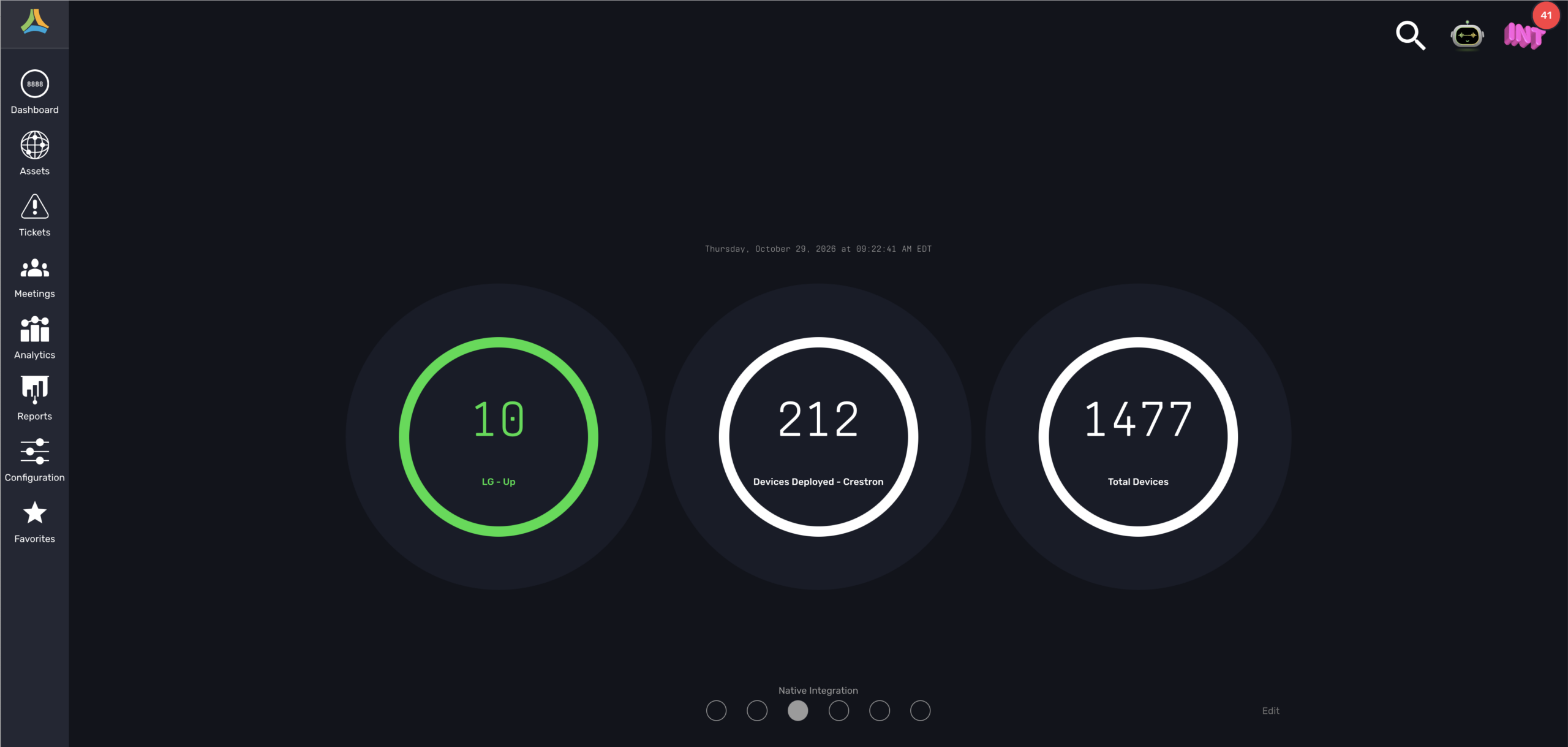
Your collaboration technology generates mass amounts of data. Enable your IT team to turn that data into action.
Today’s meeting rooms are more sophisticated than ever. Displays, control systems, touch panels, video conferencing equipment, and other technologies work together to create seamless collaboration experiences. And while some technologies seem “simple,” behind the scenes, managing these environments can be anything but.
With technology from multiple manufacturers, IT teams often find themselves navigating different management platforms, monitoring tools, and data sources just to understand what’s happening across their environments, from a tactical “right now” to a strategic “tomorrow”.
The challenge isn’t a lack of information. It’s bringing that information together in a way that makes it useful.
Symphony changes that with a unified view of your multi-vendor AV and collaboration data into a single platform, giving IT teams the visibility and intelligence they need to monitor performance, troubleshoot issues, and make better technology decisions.
Every device in your collaboration environment generates valuable operational information. Device health, connectivity, software versions, performance metrics, and incident history can all provide insight into how well your technology is functioning.
But when that information is disparate, identifying patterns and understanding the wholistic picture becomes difficult. Symphony brings supported device data together, allowing IT teams to move beyond monitoring individual components and gain a more comprehensive understanding of the entire collaboration environment.
Integrations with manufacturers such as Crestron and LG demonstrate how Symphony turns disconnected device information into actionable intelligence.
Organizations using Crestron technology may already rely on XiO Cloud to manage and monitor their devices. Symphony builds on that investment by integrating directly with XiO Cloud, bringing available Crestron device information into a broader, multi-vendor management environment.
Rather than requiring every Crestron device to connect individually to Symphony, the integration leverages information already available through XiO Cloud.
IT teams can access monitoring data from supported devices, including:
More importantly, this information can be viewed alongside data from other manufacturers, helping IT teams understand how individual devices contribute to the overall health and utilization of their spaces. What are the technology standards being deployed within different regions? Are rooms with certain technology pairings utilized more or less? What are the refresh cycles taking place within a manufacturer or location?
Visibility is only the beginning. Additional value comes from knowing when something needs attention and being able to respond quickly and efficiently.
Using information received through the Crestron XiO Cloud integration, Symphony enables IT teams to establish meaningful alerts triggered based on conditions that matter. For example, a device going offline or exceeding a defined performance threshold can trigger an alert and auto-generate a ticket for investigation. Instead of continually checking individual devices or waiting for users to report problems, technicians can focus on incidents that require action.
With Symphony and leading technologies, such as Crestron, organizations can transition from reactive troubleshooting toward more proactive technology management, reducing manual monitoring efforts and improving operational efficiency.
While visibility helps teams identify issues, the ability to act remotely can significantly improve how quickly hose issues are resolved. Symphony’s integration with supported LG displays provides both monitoring in tformation and remote device management capabilities. IT teams can access available display data, including connectivity status, hardware temperature, and a range of other device properties. By viewing this information alongside the rest of their AV environment, technicians gain a more complete picture of device health without switching between multiple management systems.
When a display requires attention, sending a technician to the physical location isn’t always necessary, feasible, or practical. Through Symphony, IT teams can access supported LG device controls to perform common actions remotely, including:
Teams can also create favorite controls, making frequently used actions easier to access. Consider a display in a conference room that needs to be rebooted. Rather than dispatching someone to the room, a technician may be able to resolve the issue directly from Symphony. Multiply those opportunities across hundreds or thousands of displays, and the potential operational benefits become significant.
Whether technology is located across a building, campus, city, or global enterprise, remote management helps IT teams support more devices without requiring a physical presence for every issue.
Bringing device information into one platform does more than simplify monitoring. It creates opportunities to better understand how technology is performing over time. With Symphony, IT teams can move between a high-level view of their environment and the detailed information needed to investigate specific issues.
This enables organizations to:
See the bigger picture. Understand the overall health and performance of collaboration technology across rooms, buildings, campuses, and locations.
Drill into the details. Investigate individual devices, examine available performance information, and identify potential root causes.
Recognize recurring problems. Analyze incident trends to identify devices, rooms, or technologies that consistently require attention.
Focus on what matters. Establish relevant alerts and thresholds that help reduce unnecessary noise and direct technicians toward meaningful issues.
Make more informed decisions. Use operational and historical information to support maintenance planning, technology investments, and long-term AV strategy.
Instead of simply collecting data, organizations can use it to understand where improvements are needed, replicate successes, and make decisions that support better collaboration experiences.
As collaboration environments grow, IT teams face increasing pressure to support more technology with limited resources. Artificial intelligence can help, but only when it delivers practical value rather than introducing another layer of complexity or noise. Symphony approaches AI as an optional resource that supports technicians throughout the troubleshooting process.
Using available device and incident information, Symphony can provide AI-assisted Tier 1 troubleshooting recommendations when a technician requests additional guidance. For example, when a device that is unfamiliar to the technician experiences an issue, that technician can request suggested troubleshooting steps to help determine the next course of action. Because Symphony knows the manufacturer, model, software and/or firmware version, issue, and more, the Tier 1 troubleshooting options are tailored to the actual device and problem.
Experienced technicians who already know how to resolve the issue can continue working without AI assistance.
If the recommended steps don’t resolve the problem, the ticket can be escalated to Tier 2 with information about the troubleshooting already performed, helping reduce duplicated effort and providing additional context for the next technician. This approach can also help less-experienced technical resources become more confident in supporting unfamiliar devices and technologies. Rather than replacing technical expertise, Symphony’s AI capabilities are designed to make that expertise more accessible and help teams work more efficiently.
Your meeting rooms may contain technology from many manufacturers. Your IT team shouldn’t have to manage each one in isolation.
By bringing multi-vendor data together, Symphony helps organizations simplify monitoring, streamline troubleshooting, enable remote management, and uncover insights that support better operational and strategic decisions.
Integrations with platforms such as Crestron XiO Cloud and supported LG displays demonstrate how existing technology investments can become part of a more connected, intelligent management strategy. And with AI-assisted troubleshooting, teams can access additional guidance when they need it, without disrupting established workflows.
With Symphony, organizations can turn fragmented AV information into meaningful action, helping IT teams spend less time searching for answers and more time improving the collaboration experience.
