
Nov 17, 2026
From Data to Action: How Symphony Simplifies Multi-Vendor AV Management
View moreNov 20 - 2026

Your collaboration environment is multi-vendor. Managing it shouldn’t be complicated.
Today’s meeting rooms bring together technology from a wide range of manufacturers. A single collaboration space might include Logitech video conferencing equipment, Legrand | AV infrastructure, Q-SYS audio systems, and other technologies working together to deliver a seamless meeting experience.
While these solutions are designed to work together in the meeting room, managing them across an enterprise can be difficult and time consuming. Each manufacturer offers its own monitoring and management capabilities, but the information is in their tools about their technologies.
For IT teams responsible for hundreds or thousands of devices across multiple buildings, campuses, or global locations, navigating these different systems can quickly become sunk time. Opening up 8, 9, 10 portals to get a view on health, both good and bad.
Symphony simplifies that complexity by bringing multi-vendor AV, unified communications (UC), and collaboration technology together in one intelligent monitoring and management platform.
Your organization shouldn’t have to standardize on a single manufacturer to achieve centralized visibility and control. In fact, there is no such thing as a single manufacturer that can do all the things you need. Organizations invest in a combination of technologies to meet different business needs, room requirements, and user preferences. Those investments should work together, not create additional challenges.
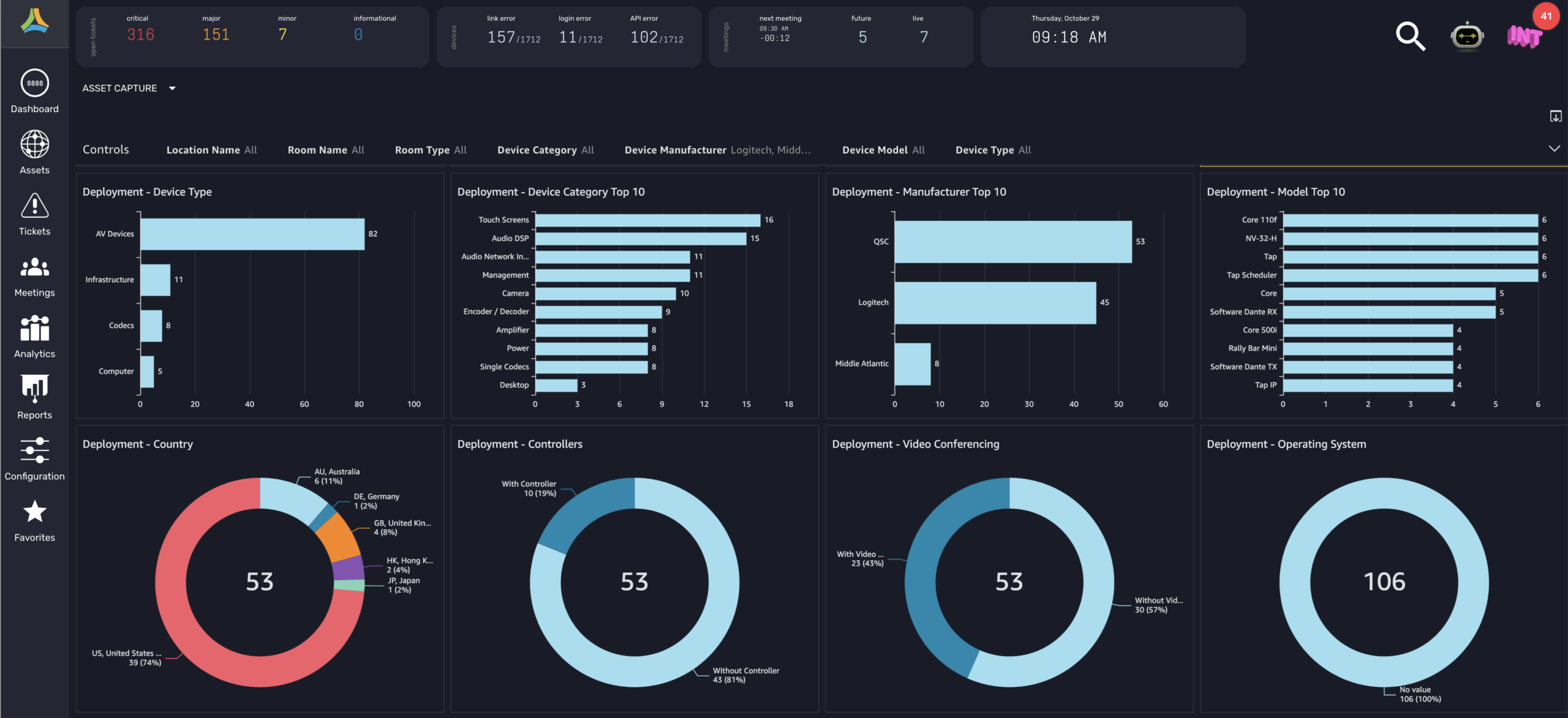
Symphony helps IT teams manage these diverse environments by consolidating information from supported manufacturers into a centralized platform.
Instead of switching between multiple applications to understand device health and room performance, technicians can access the information they need through a single interface.
With Symphony, organizations can:
The result is a connected approach to managing collaboration technology, one that works the way you require.
Logitech technology plays an important role in meeting rooms of all sizes, from small huddle spaces to larger conference rooms. Logitech Sync provides valuable visibility into supported Logitech devices, but IT teams managing multi-vendor environments also need to understand how those devices fit into the broader collaboration ecosystem.
Through its integration with Logitech Sync, Symphony brings available Logitech device information, and peripherals, into a centralized monitoring environment. IT teams can view supported device status and health information alongside data from other AV and UC technologies.
This means Logitech-equipped rooms don’t need to be treated as a separate management environment. Instead, technicians can monitor Logitech technology as part of their overall collaboration infrastructure, helping them identify potential issues and maintain a more consistent support experience across meeting spaces.
When people think about room technology, they often focus on cameras, microphones, and displays. But a reliable collaboration experience also depends on the supporting AV infrastructure operating behind the scenes. Legrand | AV technologies can play an essential role in connecting, distributing, and managing the signals and systems that make collaboration possible.
When an issue occurs within that infrastructure, identifying the source of the problem can be challenging, particularly when technicians must investigate multiple systems independently. Symphony helps address this challenge by bringing monitoring information from supported Legrand | AV technologies into the same environment used to monitor other collaboration devices.
This allows IT teams to access available device information, identify potential problems, and include supporting AV infrastructure in their broader monitoring and troubleshooting workflows. And when using such technologies as intelligent PDUs, technicians can even “reboot” technologies simply by turning a PDU outlet off/on remotely.
By extending visibility beyond the video and audio of a virtual meeting, Symphony helps organizations develop a more complete understanding of the technology supporting their collaboration experiences.
Audio and control systems are critical to the success of modern collaboration spaces, particularly in larger or more complex meeting environments. Q-SYS Reflect provides powerful capabilities for managing these systems, but organizations with diverse AV and UC environments need a way to view that information alongside the rest of their technology. Symphony brings available Q-SYS Reflect and device information into its centralized monitoring platform.
This enables IT teams to incorporate supported Q-SYS technologies into their broader operational workflows, using available data to investigate room issues and understand system health. For example, when users report a problem in a conference room, technicians can review available Q-SYS information alongside data from other supported manufacturers.
Rather than investigating each component in isolation, they can build a more complete picture of the room’s technology environment. Is the issue isolated to a single device? Is it an issue across a room or manufacturer? A technician can resolve the issue quickly, but then look at the larger environment to see if there is a wider root cause to resolve.
This broader visibility helps streamline troubleshooting and supports a more coordinated approach to managing complex collaboration spaces.
Integrating technologies from Logitech, Legrand | AV, Q-SYS, and other manufacturers delivers value beyond simply reducing the number of platforms IT teams need to access. It creates opportunities to improve how organizations monitor, support, and optimize their collaboration environments.
Managing collaboration technology across multiple locations can be challenging, especially when each site uses a different combination of manufacturers. Symphony provides a unified view of supported devices and systems across rooms, buildings, campuses, and global locations.
IT teams can understand the overall health of their environment while retaining the ability to investigate individual devices and issues.
Waiting for an employee to report a meeting room problem is not the most efficient approach to IT support. And if reported, the issue has already impacted the users negatively. By collecting monitoring information from supported technologies, Symphony helps teams identify device conditions that may require attention before the end users walk into the spaces.
When something goes wrong, technicians need information quickly. “The room isn’t working,” doesn’t give the level of detail required to fix the issues. Having device and system data available through one platform reduces the time spent moving between separate tools to investigate an issue.
Symphony also provides remote management capabilities for supported technologies, allowing technicians to take action without going to the physical location. Go to the room when needed, not as the default workflow.
Whether supporting a conference room down the hall or an office on another continent, faster access to information can help reduce troubleshooting time and minimize disruption.
IT teams have more things to do than repeatedly check device status or manually track every incident. Symphony helps streamline routine monitoring and incident management activities through configurable alerts, automated ticket creation, and operational workflows. This allows technical resources to spend less time on repetitive tasks and more time addressing issues that require their expertise.
The value of multi-vendor visibility extends beyond resolving individual incidents. When information from different technologies is brought together, IT teams can begin identifying patterns and trends across their environments. Which meeting rooms experience recurring issues? Which devices require frequent attention? Where should technical resources be focused?
By analyzing operational data and incident trends, organizations can make more informed decisions about maintenance, technology investments, and long-term collaboration strategies. Instead of simply reacting to problems, IT teams can use the information they already have to continuously improve technology performance and the collaboration experience.
Collaboration environments will continue to evolve, and organizations will continue adopting technologies from different manufacturers to meet their changing needs. That diversity shouldn’t come at the expense of visibility, operational efficiency, or the user experience. Symphony helps bring your existing technology investments together, along with future investments, providing a centralized approach to monitoring, managing, and analyzing supported AV and UC systems.
With integrations across manufacturers such as Logitech, Legrand | AV, and Q-SYS, IT teams can spend less time navigating separate tools and more time keeping collaboration experiences running smoothly. They can find the information they need, investigate problems more efficiently, and use operational data to make better decisions.
Colleague, customer, and partner collaboration is not a single device activity. Neither is keeping environments healthy. ingful action, helping IT teams spend less time searching for answers and more time improving the collaboration experience.
